Video Maker Music Video Editor
- 4.4
- Rating
- 100.00M
- Installs
- Free
- Price

 Analysis by App-foxy
I spent time with AI Video Maker AI Video Editor as a practical mobile editing tool rather than treating it like a full desktop replacement. It sits in the video players and editors category, comes from VIDEOSHOW Video Editor & Maker & AI Chat Generator, and is aimed at people who want to turn ordinary clips into something shareable without learning a complicated timeline first. The free entry point is a major part of its appeal, although optional purchases range from $0.99 to $199.99 per item.
My first impression was that it is built for momentum. You choose media, try a style, add music or effects, and keep moving. That approach suits a quick family video, a short travel montage, a birthday greeting, or a social post far better than a traditional editor that expects you to understand tracks, keyframes, and export settings before you can make anything useful. The trade-off is that convenience can become limiting when you want exact control over every cut.
How the editing experience feels in everyday use
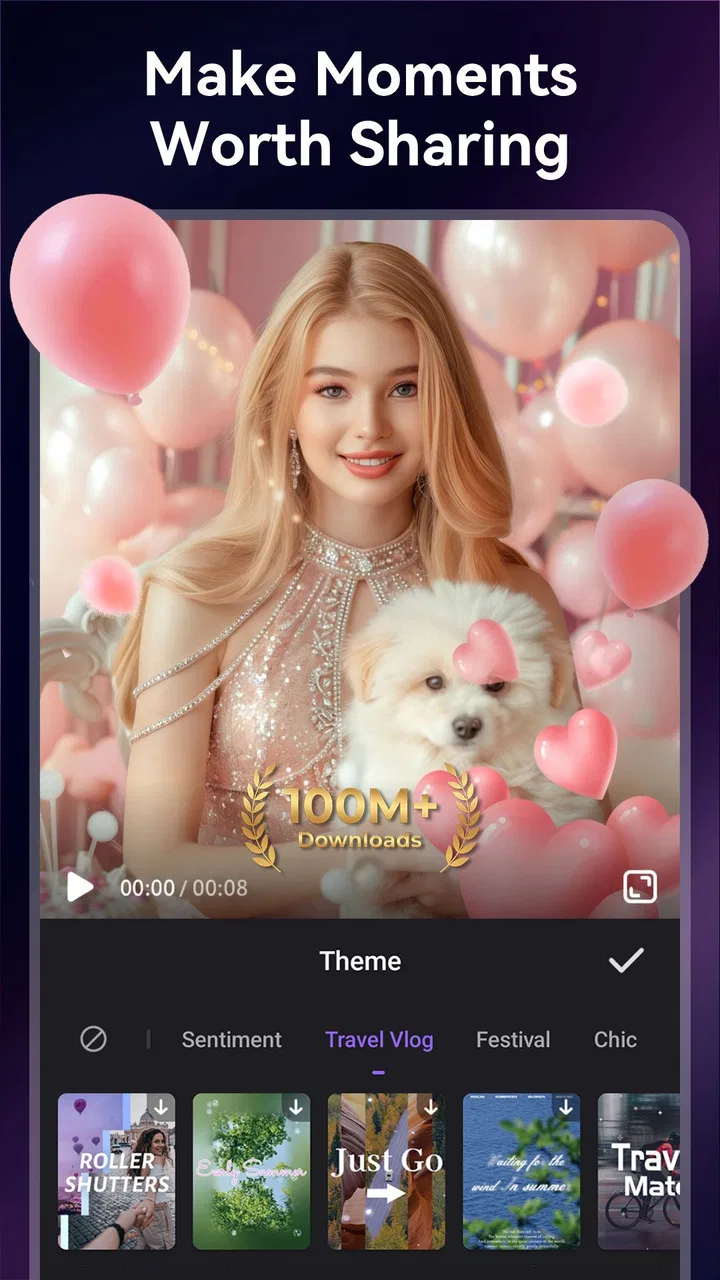
The app’s short store description calls it an AI Video Maker, while its broader identity is an AI-assisted editor with music, effects, filters, and slow motion. In practice, I found that combination most useful when I already had a clear small project in mind. It is not the kind of tool I would open to organize a large film library. It is better suited to selecting a handful of clips and shaping them into a finished moment.
In-Depth Coverage of Video Maker Music Video Editor
The workflow feels approachable because the creative decisions are visible quickly. A filter can change the mood immediately, slow motion can make a brief action feel more deliberate, and music can give a sequence a sense of direction even when the original footage is disconnected. For someone who normally sends unedited clips, that is a meaningful improvement without requiring a course in video production.
I especially liked the way this style of editor encourages experimentation. You can try a visual effect, compare the result, and decide whether it helps rather than committing to a complicated project structure. That makes it friendly for beginners, but experienced users should understand the boundary: speed of creation is the priority, not the deepest possible control.
What makes it feel quick, and what can slow it down
Perceived speed depends on the task. Browsing a small group of clips and making basic changes feels much lighter than building a long sequence with several visual treatments. The app can get you to a preview quickly, but the final processing stage naturally becomes more demanding as the project grows. I would not judge it only by how fast the first screen appears; the complete path from selection to saved video matters more.
A useful habit is to decide the purpose of the video before adding effects. If I am making a short greeting, I can keep the structure simple and avoid spending time testing every filter. If I am preparing a travel montage, I first remove weak clips and then add music and motion effects. This keeps the project manageable and makes the editor feel more responsive because I am not asking it to process unnecessary material.
The practical speed advantage is not just faster rendering; it is faster decision-making. The app puts familiar creative tools close enough that I can finish a modest project without repeatedly stopping to learn a technical control. That matters on a phone, where a complex interface can be more frustrating than the editing itself.
Where heavier projects put more pressure on the phone
Longer videos, multiple effects, slow-motion sections, and music layered over many clips are the moments when I would expect the greatest strain. I am careful not to treat every delay as an app problem, because the phone, available storage, source-video size, and background activity all influence the experience. Still, this is not a lightweight photo filter pretending to be a video editor; demanding projects require more patience.
My advice is to work in stages. First create the basic sequence, then check that the order and timing feel right, and only afterward add the more demanding visual touches. This gives you a recoverable version of the project and avoids wasting time polishing a section that later gets removed. It is also a sensible way to reduce frustration if the phone becomes warm or the preview stops feeling smooth.
Another overlooked trade-off is that attractive effects can make a video harder to watch. Slow motion is useful when it emphasizes a jump, a gesture, or a reveal, but applying it everywhere weakens its impact. Filters work best when they support the scene rather than hiding poor lighting. The app makes experimentation easy, so the discipline has to come from the editor.
A realistic workflow for a busy day
Imagine I have recorded several short clips at a child’s school performance and want to send a polished recap to family that evening. I would begin by choosing only the clearest moments, place them in a natural order, and remove pauses that do not add anything. Then I would use a restrained filter if the lighting is inconsistent, add music at a level that does not overwhelm the original atmosphere, and reserve slow motion for one meaningful gesture.
Before saving, I would watch the complete result rather than judging each clip separately. This catches abrupt transitions, an ending that feels too sudden, or music that continues after the visual story has finished. If the project feels heavy, I would save a simpler version first and then add effects one at a time. That workflow is less glamorous than adding everything immediately, but it gives me a better chance of finishing the video before the moment has passed.
You May Also Like

 Samsung Music
’s Quiet Strength Is Playing What You Already Own
Its reach comes less from spectacle than from dependable access to a personal library. That simplicity is both the app’s strongest retention engine and its ceiling.

 AccuWeather: Weather Radar
AccuWeather Review: A Quick, Clear Forecast for Everyday Decisions
For everyday plans, the best forecast is the one you can understand quickly. AccuWeather makes rain timing, radar, and local conditions easy to act on, with a few trade-offs.

 Hill Climb Racing
Why Hill Climb Racing Still Turns Crashes Into One More Run
A tiny car, a bumpy hill and one more upgrade: Hill Climb Racing keeps resurfacing because its simple chaos makes every near-miss feel personal.

 AliExpress - Shopping App
AliExpress Makes Global Shopping Feel Personal, but Shoppers Bear the Risk
AliExpress turns a global marketplace into a pocket-sized discovery engine. Its reach is useful, its shopping loop compelling, and its trade-offs easy to miss.

 Lords Mobile: Kingdom Wars
Lords Mobile Is a Kingdom-Building Routine, Not a Quick Match
A case-by-case verdict on the building, battles, device demands, and social commitments that make Lords Mobile rewarding for some players and exhausting for others.

 PDF Scanner app - TapScanner
TapScanner Makes Paperwork Easier to Capture, Check, and Share
TapScanner makes scanning with a phone feel less like a rescue operation and more like a dependable step in getting work done. Its capture tools are useful, though not flawless.
More From Our News Desk
View All News


For a quick social clip, I would use the same principle in miniature: select fewer clips, keep one visual idea, and avoid stacking effects simply because they are available. The app is at its best when it removes friction from a clear idea. It is less convincing when it becomes a collection of unrelated decorations.
Stability, recovery, and protecting your work
Reliability in a mobile editor is about more than whether it opens. It also means whether previews remain usable, whether changes behave consistently, and whether you can recover sensibly when a project becomes demanding. My approach is to save progress in sensible stages and avoid treating one complex project as the only copy of an important memory.
I would also keep the original clips untouched. That is good editing practice with any mobile tool, but it matters especially when you are experimenting with effects and timing. If a result is not right, returning to the source material is much easier than trying to repair an overworked version. A short test export can also reveal whether the finished look matches the preview before you spend more time refining it.
The current version is 6.5.3.0, and the app has been available since March 6, 2018. That long presence gives it the feel of an established product rather than a newly launched experiment. Even so, no mobile editor should be treated as immune to device-specific problems. Keeping the project organized, leaving room for processing, and reviewing the final file are simple precautions that improve the overall experience.
Device requirements and resource awareness
AI Video Maker AI Video Editor requires Android 6.0 or later, which makes it accessible to a wide range of Android users. Compatibility alone does not guarantee an equally comfortable experience on every phone. Older or entry-level hardware may handle short, simple edits more comfortably than long projects filled with effects, while newer devices generally give you more breathing room for previewing and processing.
Storage is another practical consideration. Video files are large, and a project can involve original clips, temporary working material, and the final result. I would avoid starting a major edit when the phone is nearly full. If the app feels slow during a heavy task, closing unrelated apps and reducing the project’s complexity is more useful than repeatedly tapping the same control.
Battery use also deserves attention during longer sessions. Video preview and processing are more demanding than reading or messaging, so I prefer to edit when the phone has enough charge and is not already handling other intensive work. These are not flaws unique to this app, but they affect whether its quick-edit promise feels realistic on your particular device.
Who will get the most from it
This app is a strong match for beginners, casual creators, parents, students, and anyone who wants a finished video without building a detailed production workflow. The combination of music, filters, effects, and slow motion covers the changes most people want when turning phone footage into something more presentable. Its free price makes it easy to try before deciding whether the optional purchases are worthwhile for your habits.
It is also useful for people who make videos irregularly. If I only edit a few times each month, I do not want to relearn a professional interface every time. A more guided mobile experience lets me concentrate on the story instead of remembering where every advanced control is hidden.
The Teen content rating is worth keeping in mind for families. It does not change the editing workflow itself, but parents should still consider how younger users will use any app connected to video creation and sharing. The developer is clearly targeting a broad mobile audience, yet the right choice always depends on the user’s age, purpose, and comfort with in-app purchasing.
Who should choose another kind of editor
I would look elsewhere if I needed precise audio mixing, detailed color correction, complex compositing, or a carefully managed multi-track production. A desktop editor or a more advanced mobile workstation is better when timing must be exact and every layer matters. The same applies to professional client work, where predictable control and repeatable settings are more important than a fast collection of creative shortcuts.
I would also skip it for projects that depend on a very specific visual identity if the available effects do not match that identity. A filter can unify casual footage, but it cannot replace deliberate lighting, consistent framing, or a carefully designed color workflow. The app helps improve material; it cannot make weak source footage behave like professionally captured video.
Compared with a basic phone gallery editor, this tool offers a broader creative range through its music, effects, filters, and slow-motion options. Compared with a professional editor, it gives up depth in exchange for accessibility. That middle position is the important point: it is more capable than trimming a clip, but less suitable for people who want a full production desk in their pocket.
What the popularity tells me, and what it does not
The app has a 4.4 average from around 1.3 million ratings, with roughly 16 thousand written reviews and over 100 million installs. Those figures show that it has reached a very large audience and that many people consider it useful enough to keep using. They do not mean every phone, project, or editing style will feel identical, so I would still test it with the kind of footage I actually plan to edit.
That scale does make the app easier to recommend as a starting point. A tool with such broad adoption is more likely to have a familiar workflow for casual creators, while its long-running presence suggests that it has remained relevant beyond a brief trend. I would judge the purchase decision separately, though: free access is valuable, but optional spending should be based on whether the added tools solve a real problem in your workflow.
My performance verdict
My overall view is positive, with a clear qualification. AI Video Maker AI Video Editor feels fastest and most dependable when I use it for focused, modest projects: a short montage, a personal greeting, a simple recap, or a social video built from a manageable set of clips. Its biggest strength is reducing the distance between raw phone footage and a presentable result.
Its limits appear when the project becomes long, effect-heavy, or technically exacting. At that point, device resources matter more, processing deserves patience, and a more advanced editor may save time despite having a steeper learning curve. I would protect original footage, save in stages, and add demanding effects only after the basic edit works.
For someone asking whether it is worth trying, my answer is yes if you want a free, approachable video editor and do not need professional-level control. The app’s current version is 6.5.3.0, and its Android requirement of 6.0 or later keeps the entry barrier fairly low. Just approach it as a practical creative companion rather than a complete replacement for a desktop suite. Used with that expectation, it is a convenient way to make everyday videos feel intentional without turning a simple memory into a technical project.
FAQs for Video Maker Music Video Editor
01What features does the AI Video Maker AI Video Editor offer?
The AI Video Maker AI Video Editor provides a suite of innovative features, including automatic video editing using AI algorithms, a variety of templates, transitions, and effects, as well as the ability to add music and text overlays. Its user-friendly interface makes it accessible for beginners, while advanced editing options cater to more experienced users.
02Is AI Video Maker AI Video Editor suitable for beginners?
Yes, AI Video Maker AI Video Editor is designed with beginners in mind. Its intuitive interface and AI-driven tools simplify the editing process, allowing users to create polished videos without extensive editing knowledge. The app offers tutorials and guides to help new users get started quickly and efficiently.
03How does the AI technology enhance video editing in this app?
The AI technology in AI Video Maker AI Video Editor automates many aspects of video editing, such as cutting clips, applying filters, and selecting transitions. It analyzes your footage to suggest the best edits, saving you time and effort while ensuring a seamless and professional-looking final product.
04Can I use AI Video Maker AI Video Editor on both Android and iOS devices?
Yes, AI Video Maker AI Video Editor is available on both Android and iOS platforms. You can download it from the Google Play Store or the Apple App Store, ensuring compatibility with a wide range of smartphones and tablets, allowing for flexibility and convenience in video editing on the go.
05Are there any in-app purchases or subscriptions in the AI Video Maker AI Video Editor?
AI Video Maker AI Video Editor offers a free version with basic features, but it also provides in-app purchases and subscription options for advanced tools and additional content. These premium features include access to exclusive effects, high-quality export options, and an ad-free experience, giving users more creative control over their projects.
Pros
- Intuitive interface for easy navigation.
- Wide range of editing tools available.
- High-quality video export options.
- Supports multiple video formats.
- Frequent updates with new features.
Cons
- Occasional lag on older devices.
- Limited free version features.
- Some features require in-app purchases.
- Ads can be intrusive at times.
- Large file size may require extra space.

Video Maker Music Video Editor
Gallery